Quick answer: The most famous astronomers in history span more than two thousand years and every inhabited continent — from the Greek star-mapper Hipparchus and the Islamic Golden Age master Al-Battani, through the Scientific Revolution giants Copernicus, Kepler and Galileo, to modern pioneers like Edwin Hubble and Carl Sagan. This guide profiles 30 of them and the single discovery each is remembered for.
Astronomy is the oldest of the sciences, and no single person — or culture — built it. The night sky was charted by Greek geometers, preserved and advanced by scholars of the Islamic Golden Age, transformed by Renaissance Europe, and finally cracked open by the telescopes and physics of the modern era. The astronomers below are the names that recur in every history of the field, organised chronologically so you can see how each one stood on the shoulders of those before.
Use the list as a starting map: where we have a full biography on StellarNomads, the name links straight to it. If you only know astronomy through a handful of household names, the early and non-European entries are where the most surprising stories live.
One thread runs through every entry: progress in astronomy has always been cumulative and global. The Greeks supplied geometry and the first star catalogues; Islamic scholars corrected those catalogues with centuries of patient observation and passed the refined knowledge westward; Renaissance Europe rebuilt the model of the cosmos around the Sun; and the modern era added physics, photography and ever-larger telescopes. Reading the list in order is the closest thing there is to watching the universe come into focus.
Ancient and classical astronomers
1. Hipparchus of Nicaea (c. 190–120 BC)
Often called the father of observational astronomy, the Greek astronomer Hipparchus compiled the first comprehensive star catalogue, discovered the precession of the equinoxes, and invented the magnitude scale still used to rate stellar brightness today. His trigonometric methods underpinned almost everything that followed for the next 1,500 years.
2. Aristarchus of Samos (c. 310–230 BC)
Eighteen centuries before Copernicus, Aristarchus proposed that the Earth orbits the Sun and rotates on its axis — the first known heliocentric model. He also attempted to measure the relative sizes and distances of the Sun and Moon. His ideas were largely set aside in favour of the geocentric view, but he was proved spectacularly right.
3. Eratosthenes of Cyrene (c. 276–194 BC)
The chief librarian of Alexandria measured the circumference of the Earth using nothing more than shadows, a well in Syene, and geometry — arriving at a figure within a few percent of the modern value. It remains one of the most elegant experiments in the history of science.
4. Claudius Ptolemy (c. 100–170 AD)
Ptolemy’s Almagest codified the geocentric, Earth-centred model of the cosmos that dominated Western and Islamic astronomy for over a millennium. Though his model was ultimately overturned, its mathematical sophistication was extraordinary, and it became the textbook that every later astronomer — including Al-Battani — sought to correct.
5. Hypatia of Alexandria (c. 350–415 AD)
The most celebrated woman of ancient science, Hypatia was a mathematician and astronomer who taught the construction of astrolabes and edited key astronomical texts. Her murder by a mob in 415 AD is often treated as a symbolic end to the classical age of learning. (Full StellarNomads biography coming soon.)
Islamic Golden Age astronomers
Between roughly the 8th and 15th centuries, scholars across the Islamic world preserved Greek astronomy, corrected its errors with centuries of precise observation, and laid groundwork that Renaissance Europe would later build upon. These are the most important famous Muslim astronomers.
6. Al-Battani (c. 858–929)
Known in Latin as Albategnius, Al-Battani refined the length of the solar year to within minutes, improved Ptolemy’s models, and introduced trigonometric methods that Copernicus himself would later cite. He is arguably the greatest astronomer of the medieval world.
7. Al-Farghani (c. 800–870)
Latinised as Alfraganus, Al-Farghani wrote the most influential introduction to astronomy of the age. His estimate of the Earth’s size echoed through history — Dante referenced his work, and Columbus relied on (and misread) his figures when planning his voyage west.
8. Ibn al-Haytham (c. 965–1040)
Known in the West as Alhazen, Ibn al-Haytham revolutionised optics and is widely regarded as an early pioneer of the scientific method, insisting that theories be tested against systematic observation — a principle at the heart of all modern astronomy.
9. Al-Sufi (903–986)
Abd al-Rahman al-Sufi’s Book of Fixed Stars gave the first known description of the Andromeda Galaxy — which he called a “little cloud” — and the Large Magellanic Cloud. He carefully reconciled Greek constellations with traditional Arabic star names, many of which (Aldebaran, Betelgeuse, Rigel) we still use.
10. Nasir al-Din al-Tusi (1201–1274)
A polymath who founded the great Maragheh observatory, al-Tusi devised the “Tusi couple,” a geometric device for modelling planetary motion that later appeared — remarkably — in the work of Copernicus.
11. Ulugh Beg (1394–1449)
A Timurid sultan who chose science over conquest, Ulugh Beg built a colossal observatory at Samarkand and produced the Zij-i-Sultani, a star catalogue so accurate it remained a benchmark until the telescopic era.
The Scientific Revolution
12. Nicolaus Copernicus (1473–1543)
With De revolutionibus orbium coelestium, Nicolaus Copernicus placed the Sun, not the Earth, at the centre of the cosmos — the idea that launched modern astronomy. Publishing it on his deathbed, he triggered a revolution he would never see unfold.
13. Tycho Brahe (1546–1601)
The last and greatest of the naked-eye astronomers, Tycho Brahe recorded planetary positions with unmatched precision from his island observatory of Uraniborg. His 1572 observation of a “new star” (a supernova) shattered the belief in an unchanging heavens. That mountain of data would become the raw material for Kepler. (Full StellarNomads biography coming soon.)
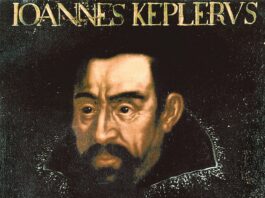
14. Johannes Kepler (1571–1630)
Using Tycho’s observations, Kepler derived his three laws of planetary motion, proving that planets travel in ellipses rather than perfect circles. He turned astronomy from geometry into physics, and his laws would later be explained by Newton’s gravity. Read our full biography of Johannes Kepler.
15. Galileo Galilei (1564–1642)
The father of observational astronomy, Galileo turned the new telescope skyward and saw Jupiter’s four largest moons, the phases of Venus, sunspots and lunar mountains — direct evidence for the Copernican system that brought him into famous conflict with the Inquisition.
16. Isaac Newton (1643–1727)
Newton’s law of universal gravitation explained why Kepler’s planets move as they do, unifying the heavens and the Earth under a single set of physical laws. He also built the first practical reflecting telescope — the design behind most large telescopes today.
17. Edmond Halley (1656–1742)
Halley applied Newton’s gravity to comets and correctly predicted the return of the comet that now bears his name. He was also the first to detect the proper motion of stars, proving the “fixed stars” are not fixed at all.
The age of bigger telescopes (18th–19th century)
18. William Herschel (1738–1822)
A musician turned astronomer, Herschel discovered Uranus in 1781 — the first planet found in recorded history — built the largest telescopes of his era, discovered infrared radiation, and produced the first serious map of the Milky Way’s shape.
19. Caroline Herschel (1750–1848)
William’s sister was a formidable astronomer in her own right: the first woman to discover a comet (she found several), the first woman paid for scientific work, and the first awarded the Gold Medal of the Royal Astronomical Society.
20. Charles Messier (1730–1817)
A dedicated comet hunter, Charles Messier grew frustrated by the fuzzy objects that masqueraded as comets — so he catalogued them. His list of 110 “Messier objects,” including the Whirlpool Galaxy (M51), remains the most beloved observing list in amateur astronomy.
21. Friedrich Bessel (1784–1846)
Bessel was the first to measure the distance to a star (61 Cygni) using stellar parallax, finally giving humanity a real sense of the scale of the galaxy. He also predicted the unseen companion of Sirius from its wobble — an early triumph of indirect detection.
22. Annie Jump Cannon (1863–1941)
Working at the Harvard Observatory, Cannon devised the stellar classification scheme (O, B, A, F, G, K, M) still used today and personally classified around 350,000 stars — more than anyone in history.
The modern era: galaxies, physics and the cosmos
23. Edwin Hubble (1889–1953)
Hubble proved that the “spiral nebulae” were in fact entire galaxies far beyond the Milky Way, then discovered that they are rushing apart — evidence that the universe is expanding. Few astronomers have so completely redrawn humanity’s picture of the cosmos. (Full StellarNomads biography coming soon.)
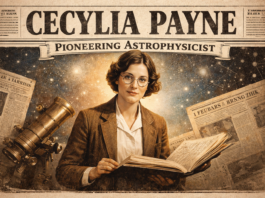
24. Cecilia Payne-Gaposchkin (1900–1979)
In a 1925 doctoral thesis later called the most brilliant in astronomy, Cecilia Payne showed that stars are made overwhelmingly of hydrogen and helium — overturning the assumption that they shared the Earth’s composition.
25. Fritz Zwicky (1898–1974)
The brilliant and combative Fritz Zwicky inferred the existence of dark matter in 1933 from the motions of galaxy clusters, coined the term “supernova,” and predicted neutron stars — decades before any were observed.
26. Subrahmanyan Chandrasekhar (1910–1995)
Chandrasekhar calculated the maximum mass of a white dwarf — the “Chandrasekhar limit” — showing that more massive stellar cores must collapse into neutron stars or black holes. He won the Nobel Prize in Physics in 1983.
27. Vera Rubin (1928–2016)
By measuring the rotation of galaxies, Rubin found that they spin far too fast to be held together by their visible matter alone — providing the strongest observational evidence yet for dark matter, and confirming Zwicky’s decades-old hunch.
28. Jocelyn Bell Burnell (b. 1943)
As a graduate student in 1967, Bell Burnell detected the first pulsar — a rapidly spinning neutron star — from a tiny, regular signal others had dismissed as interference. It is one of the landmark discoveries of 20th-century astrophysics.
29. Stephen Hawking (1942–2018)
Hawking transformed our understanding of black holes, showing theoretically that they emit radiation and can slowly evaporate (“Hawking radiation”). As the author of A Brief History of Time, he also brought cosmology to a global audience.
30. Carl Sagan (1934–1996)
A planetary scientist who advanced the study of planetary atmospheres and the search for extraterrestrial life, Sagan became the most famous science communicator of his age through the series Cosmos — inspiring a generation to look up.
Famous women in astronomy
Astronomy’s history is overwhelmingly told through men, but women shaped it at every stage — often without recognition in their own time. Hypatia of Alexandria taught the science in antiquity; Caroline Herschel and Annie Jump Cannon catalogued the heavens; Cecilia Payne revealed what stars are made of; Vera Rubin uncovered dark matter’s fingerprint; and Jocelyn Bell Burnell found the first pulsar. Their stories are among the most compelling in this entire list.
Frequently asked questions
Who is the most famous astronomer of all time?
Galileo Galilei is usually named the most famous, thanks to his telescopic discoveries and his clash with the Church. For sheer influence, however, Nicolaus Copernicus (who moved the Earth from the centre of the universe) and Isaac Newton (who explained planetary motion with gravity) are equally strong candidates.
Who is considered the father of astronomy?
The title is shared. Hipparchus is called the father of observational astronomy for his star catalogue and methods, while Galileo is called the father of modern (telescopic) astronomy.
Who was the first astronomer in history?
Astronomy predates written records — Babylonian observers were tracking the planets and predicting eclipses well over 2,500 years ago. Among named individuals whose detailed work still shapes the field, the Greek astronomer Hipparchus (2nd century BC) is usually cited as the earliest, followed by Ptolemy, whose Almagest became the standard reference for more than a thousand years.
How many famous astronomers are there?
There is no fixed number — astronomy has thousands of notable contributors. This guide focuses on 30 figures whose discoveries fundamentally changed how we understand the universe, chosen to represent every major era from ancient Greece to the present day. Many more, from Babylonian and Chinese observers to today’s working astrophysicists, could fill a list ten times as long.
Who are the most famous Muslim astronomers?
The leading figures of the Islamic Golden Age include Al-Battani, Al-Farghani, Ibn al-Haytham (Alhazen), al-Sufi, Nasir al-Din al-Tusi and Ulugh Beg — scholars who preserved and dramatically advanced the science between the 8th and 15th centuries.
Who are the most famous female astronomers?
Hypatia of Alexandria, Caroline Herschel, Annie Jump Cannon, Cecilia Payne-Gaposchkin, Vera Rubin and Jocelyn Bell Burnell are among the most influential women in the history of astronomy.
Keep exploring
Want to go deeper? Read our full biographies of Al-Battani, Al-Farghani and Galileo Galilei, or see one of Charles Messier’s most beautiful catalogue entries in our guide to the Whirlpool Galaxy (M51). New biographies of Tycho Brahe, Hypatia and Edwin Hubble are on the way.